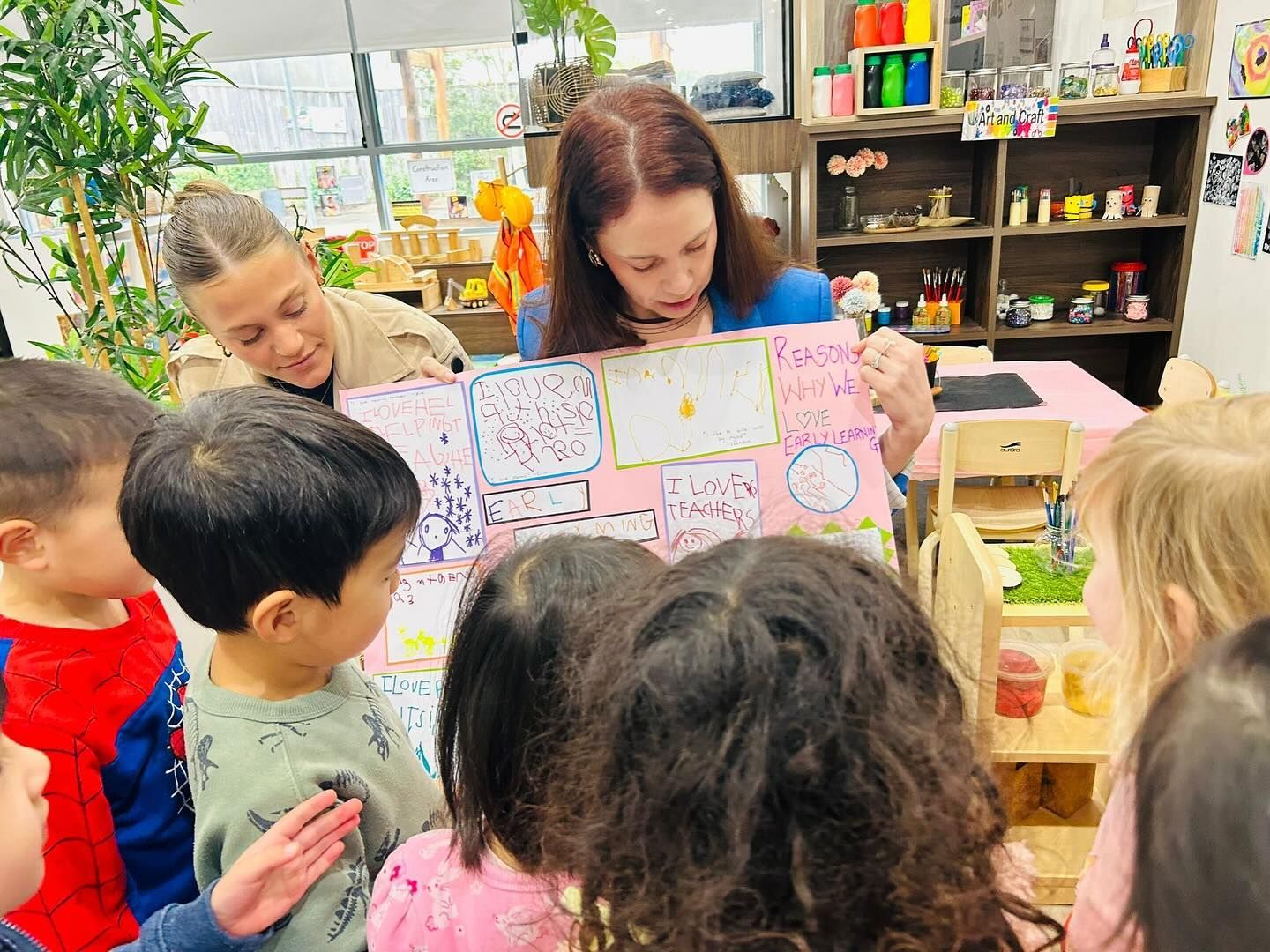

Little Hands, Big Futures: Why Parent Involvement Matters in Early Learning

As children commence their own journey to early learning, it's natural that the families of the children seek out a place where their child feels safe, supported and nurtured. Educators, educational programmes and play opportunities are vital in early childhood development, but strong parental commitment is one of the biggest contributors to a child’s chances of success.
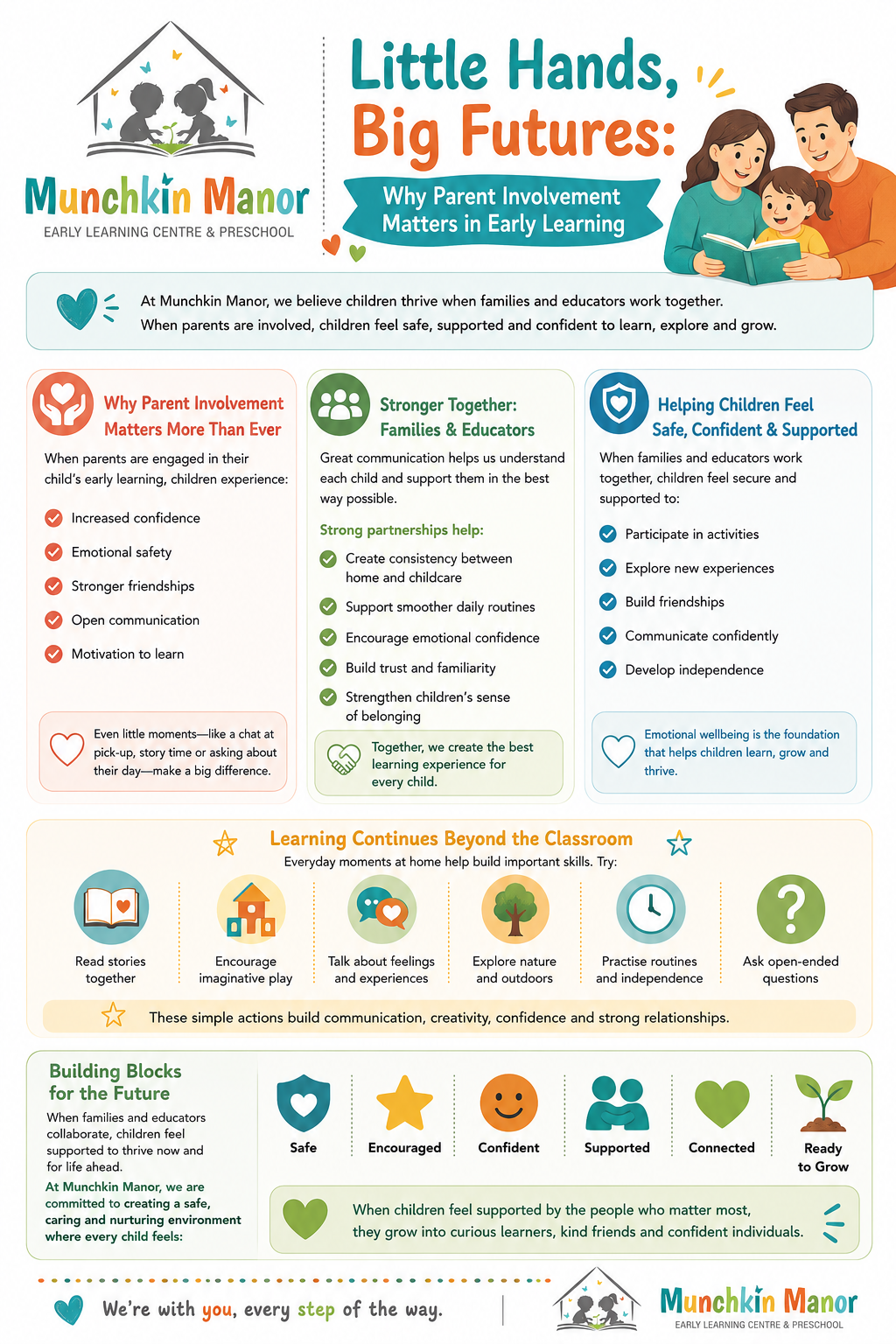
We at Munchkin Manor believe that kids do best when families and educators collaborate and work together. Positive parent involvement establishes some continuity between home and child care experiences, emotional health and the confidence children may feel to learn, explore and develop life skills.
Early education is more than schooling kids. It is also preparing them to feel safe, connected, appreciated and understood in one of the most critical periods of their lives.
Why Is Parent Involvement More Important Than Ever?
The early years mould how children communicate, form connections, solve their own problems and view the world. And in this stage, children are continuously experiencing learning from others and their surroundings. When parents remain engaged in their child’s early learning process, their children experience:
- Increased confidence in exploring new experiences
- Being emotionally safer in unfamiliar environments
- More comfortability in building friendships
- Encouraged to communicate openly
- Excited and motivated to learn
Even little acts of involvement have to be worth a lot. Sharing a simple greeting exchange at pick-up time, reading together before bed, and asking children about their day can help reinforce positive learning experiences and emotional connection.
Children are reassured when they know the parents are actively involved in their learning. It lets them know that their experiences, emotions, and accomplishments count.
Strengthening the Journey of the Child Between Families and Educators
The quality of early learning is the relationship formed between families and educators. Good communication helps professionals in an effort to identify the character, interests, habits and emotional state of each child.
No child learns the same way as the next. The best way forward for this group of children is to build a support system in which every parent, teacher and child has an equal voice by sharing information at all times. For some, being able to adapt is easy and quick, but for many others, the children, they need a bit of a boost for extra reassurance and emotional connections when things start to take a turn. A better relationship between parents and educators supports the development of an individualised educational learning experience, one which supports the individual.
A strong partnership between the parents and educators helps:
- Create consistency between home and childcare
- Support smoother daily routines
- Encourage emotional confidence
- Build trust and familiarity
- Strengthen children’s sense of belonging
At
Munchkin Manor
we think families should be connected to their child’s learning journey every step of the way. Positive communication also fosters an environment where children feel supported in a home environment as well as at the centre.
Helping Children Feel Safe, Confident, and Supported
Starting childcare is a significant milestone for children and their parents. Some kids do okay getting used to new routines, and some struggle with separation anxiety or even nervousness at times. This is when parent involvement becomes critical and strongly important. And if kids see healthy interactions between their family and teachers, trust is built in children's new environment.
Children will feel secure during the transition thanks to established communication structure, routines and soothing emotions. Feelings of emotional support encourage children to:
- Participate in activities
- Explore new learning experiences
- Build friendships
- Communicate confidently
- Develop independence
The foundation of successful early learning is emotional wellbeing. All children need to feel secure, understood and supported before they can learn and thrive confidently. The learning doesn’t stop in a
childcare centre.
Learning Continues Beyond the Classroom
Everyday actions are small, and they are just what reinforce those important early developments:
- Reading stories together
- Encouraging imaginative play
- Talking about feelings and experiences
- Exploring nature and outdoor environments
- Practising routines and independence
- Asking open-ended questions
These activities enhance children’s communication, creativity, confidence, and emotional connection but also assist them to form positive relationships with the learning process.
Children get the most out of learning when it is as natural, fun and supported as possible, whether they're learning in a home or in a
childcare setting.
Building Blocks for the Future
Kids learn in the early years to start their lifelong journey into lifelong learning, mental wellbeing and social development. When parents and educators collaborate, children are more confident and receive the support they need to excel now and for life ahead.
Everything we do at Munchkin Manor is based on the principle that all children deserve a safe, caring, nurturing place to be, where every day is about building relationships with their families, participating in intentional learning opportunities, and finding what makes them special. With positive partnerships with families, we work towards an early learning experience where all our children feel:
- Safe
- Encouraged
- Confident
- Supported
- Connected
- Ready to grow
Because when children feel like they are supported by the people who matter to them, they are more likely to grow into curious learners, self-assured communicators, and resilient young people ready to accept the world around them.
Frequently Asked Questions
What can the parents do to keep engaged in their child’s early learning?
Parents staying involved in these activities are key to communicating with educators on a regular basis, attending centre events, supporting home-based learning opportunities and engaging in open conversations about their child’s experiences and developmental concerns.
How do families contribute to a child’s confidence and maturity?
From an early age, family is an important factor to create self-esteem, communication skills, emotional security and positive feelings about learning in children because the right family plays a much bigger role in this process.
What are ways parents can help their child in their transition away from home arrangements?
Parents can offer a few suggestions with things to help: consistency of routine, making it a point to describe the childcare positively, communicating openly with teachers, and and giving your child lots of space and time to cope to make the transition and learn at his or her own pace.
Why is it so important for parents to communicate with teachers as well?
Clear communication among educational professionals will enable one to learn more about a child’s needs, their routines, interests, and individualised learning styles.